

ICMR
Palmoplantar pustulosis
Research center in Spain (Madrid)
Clinical studies in palmoplantar pustulosis
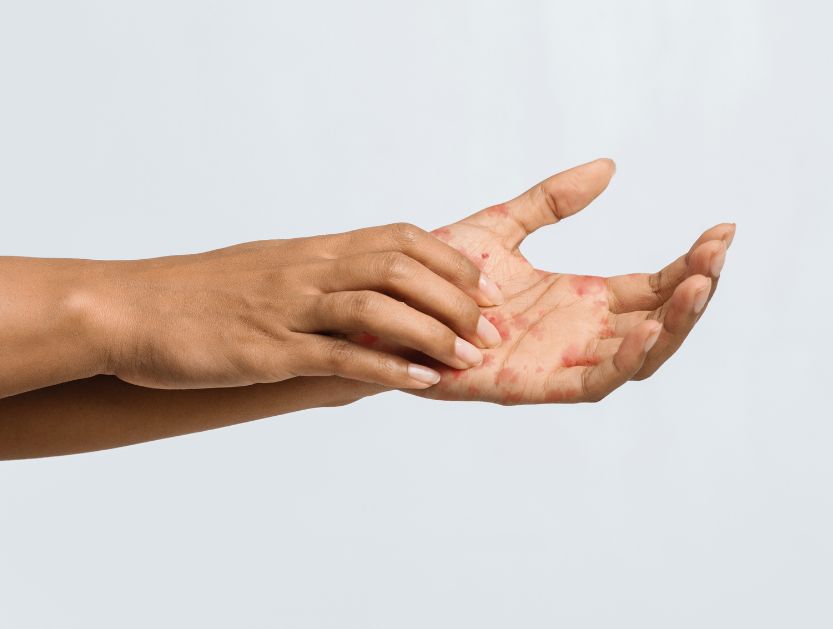
Palmoplantar pustulosis is a chronic inflammatory disease that affects the palms of the hands and the soles of the feet. It is characterized by the recurrent appearance of pustules, together with redness, scaling, pain or fissures that may significantly interfere with everyday activities.
Despite the therapeutic options currently available, the disease may follow a persistent course and can be difficult to control. For this reason, it remains necessary to continue developing research projects that help improve understanding of its inflammatory mechanisms and evaluate new therapeutic alternatives.
At ICMR, an international medical research center based in Madrid, Spain, we participate in rigorous clinical studies that are regulated and authorized by ethics committees and the competent health authorities. Our commitment is focused on advancing medical knowledge and developing new options for people with palmoplantar pustulosis and other inflammatory skin diseases.
What is palmoplantar pustulosis?
Palmoplantar pustulosis, also known as PPP, is an inflammatory disease characterized by the repeated appearance of small pustules on the palms of the hands, the soles of the feet or both.
The pustules are not usually caused by infection. Their content is considered sterile, and their appearance is related to the inflammatory activity of the disease. Over the course of several days, they may dry out, turn brown and lead to scaling or crusting.
The disease may present with:
- Whitish or yellowish pustules.
- Redness and inflammation.
- Scaling and thickening of the skin.
- Pain, itching or burning sensation.
- Fissures that may make walking or using the hands difficult.
- Recurrent flare-ups of varying intensity.
Palmoplantar pustulosis has traditionally been associated with the spectrum of pustular diseases and with psoriasis, although it has its own clinical, genetic and therapeutic characteristics. It may appear both in people with psoriasis in other areas of the body and in people who have no other manifestations of psoriasis.
What is a clinical trial?
A clinical trial is a regulated research study designed to evaluate the safety, tolerability and efficacy of medicines, medical devices, therapeutic procedures or prevention strategies.
All clinical trials conducted at ICMR are carried out under strict protocols, in accordance with current legislation and international ethical principles. In addition, they are reviewed and authorized by independent ethics committees and the competent health authorities.
These procedures are designed to protect the rights, safety and well-being of the people who decide to participate.
How are clinical trials in palmoplantar pustulosis conducted?
Clinical studies evaluating new therapeutic options are usually divided into several phases:
Phase I: first evaluation in humans, mainly focused on determining safety, tolerability and appropriate doses.
Phase II: initial evaluation of efficacy and treatment response in a limited group of participants.
Phase III: comparison of the new therapeutic option with other treatments or control groups in a larger population.
Phase IV: studies conducted after treatment authorization to expand the available information on its use in clinical practice.
Throughout the entire process, participants are supervised by a specialized medical team that provides detailed and continuous follow-up.


Active clinical trials in palmoplantar pustulosis
DISEASE
Pustulosis palmo-plantar
Study aimed at evaluating the efficacy of treatments for adults with palmoplantar pustulosis.
People aged 18 years or older.
Diagnosis of palmoplantar pustulosis.
Presence of more than five whitish or yellowish pustules.
Pustules located on the palms of the hands, the soles of the feet or both areas.
ICMR is a leading clinical research center in Europe
GENERAL INFORMATION
Research project in palmoplantar pustulosis
At ICMR, we participate in research projects aimed at improving the understanding and treatment of palmoplantar pustulosis and other inflammatory skin diseases.
Our projects may include:
- Evaluation of new therapeutic options aimed at controlling inflammation.
- Research into the immune mechanisms involved in the appearance of pustules.
- Study of alternatives for people with persistent or recurrent disease.
- Analysis of factors related to insufficient response to available treatments.
- Evaluation of the impact of the disease on mobility, manual activity and quality of life.
All our research activity is conducted in accordance with Good Clinical Practice and under strict ethical, scientific and quality standards. La evidencia disponible continúa señalando la necesidad de investigar opciones más eficaces y de identificar qué tratamientos pueden resultar más adecuados para cada perfil.
Contributions of clinical research in palmoplantar pustulosis
Participation in research projects helps generate high-quality medical knowledge. Thanks to clinical trials, it is possible to:
- Evaluate the efficacy and safety of new therapeutic alternatives.
- Gain deeper insight into the inflammatory pathways involved in the disease.
- Study options for people with persistent or difficult-to-control flare-ups.
- Improve assessment of disease severity and treatment response.
- Analyze the impact of lesions on everyday activities and quality of life.
- Move towards strategies that are better adapted to each person’s individual characteristics.
These advances may contribute to expanding management options for palmoplantar pustulosis in future clinical practice.
About the available clinical studies
Clinical studies in palmoplantar pustulosis may investigate:
- New molecules targeting specific inflammatory mechanisms.
- Therapeutic options designed to reduce the number and intensity of pustules.
- Strategies aimed at prolonging control between flare-ups.
- Alternatives for people who have not achieved a sufficient response with previous treatments.
- More precise methods for assessing disease severity and activity.
Participation requirements may vary depending on the specific project and may include factors such as:
- Age.
- Confirmation of the diagnosis.
- Number and location of the pustules.
- Duration and activity of the disease.
- Treatments used previously.
- General health status.
- Other criteria defined in the protocol.
Meeting the general requirements does not guarantee inclusion in the study. Participation must be assessed and confirmed by the research team.
Important considerations
Before deciding whether you would like to receive information about participating in a clinical study, it is important to consider the following:
- Participation is voluntary.
- You may decide not to participate after receiving all the information.
- You may withdraw from the study at any time, without this affecting your usual medical care.
- Investigational treatments do not guarantee an individual clinical benefit.
- Response may vary from one person to another.
- The treatments under study may involve risks or side effects.
- All studies are regulated and supervised by health authorities and independent ethics committees.
- Before participating, you will receive detailed information about the visits, tests, procedures and potential risks.
Our team is available to provide you with all the information you need in a clear, confidential and transparent manner before you decide whether you would like to participate.
Frequently asked questions about clinical trials in palmoplantar pustulosis
Does participating in a clinical study involve any cost?
No. Treatments, visits and medical assessments directly related to the study are usually covered by the sponsor.
Is palmoplantar pustulosis an infection?
No. Although the lesions contain a whitish or yellowish material similar to pus, the pustules are considered sterile and are not usually caused by bacteria or fungi. Palmoplantar pustulosis is an inflammatory disease and is not contagious.
Is it the same as psoriasis?
Not exactly. Palmoplantar pustulosis has traditionally been included within the spectrum of pustular diseases related to psoriasis. However, it has its own characteristics and may appear without psoriasis being present in other areas of the body. Its classification and exact relationship with psoriasis continue to be studied.
What safety measures are in place?
Clinical studies follow protocols approved by ethics committees and regulatory authorities. Throughout the process, participants receive follow-up from a specialized team.
What happens if I want to leave the study?
You can withdraw from the study at any time, without having to give a reason and without it affecting your future medical care.
How is my personal data protected?
Medical and personal data are treated confidentially and in accordance with current data protection regulations.
Does meeting the general criteria guarantee participation?
No. The published criteria provide initial guidance, but the research team must assess each case and confirm that all requirements established in the protocol are met.
Where can I get more information?
If you would like to learn more about the clinical studies in palmoplantar pustulosis conducted at ICMR Research, you can contact our team confidentially:
- Through the contact form on our website.
- Through the pre-screening questionnaire.
- By emailing us at info@icmrresearch.com.
- By requesting information through the ICMR phone line.
We will respond in a personalized manner, always respecting your privacy and your right to decide freely.
About us
ICMR is a reference center in Spain and Europe dedicated to the research of inflammatory and/or immune-mediated dermatological diseases. Promoted by the Pedro Jaén Foundation, our main objective is to transfer the highest level of science to patients who cannot find a solution to their dermatological problems with currently approved treatments.
Research areas
At ICMR we are committed to developing research in all dermatological indications, with special attention to:

Psoriasis
We analyze genetic and immune factors to improve the management of this disease.

Alopecia areata
We investigate the autoimmune basis and new options that stimulate hair growth.

Hidradenitis suppurativa
We analyze genetic and immune factors to improve the management of this disease.

Atopic dermatitis
We explore the alteration of the skin barrier and the mediators that cause inflammation.

Nodular prurigo
We study the origin of severe itching and investigate therapies to relieve symptoms.

Vitiligo
We investigate the autoimmune process that affects melanocytes and how to recover pigmentation.

Notalgia paresthetica
We study the neuropathic origin of itching and therapies to control the symptoms.

Nummular eczema
We explore new options to improve the control of persistent flare-ups and skin inflammation.

Palmoplantar pustulosis
We evaluate alternatives to reduce pustules, inflammation and discomfort on the palms and soles.

Lichen planopilaris
We investigate strategies to control follicular inflammation and slow the progression of scarring alopecia.