

ICMR
Nodular prurigo
Research center in Spain (Madrid)
Clinical studies in nodular prurigo
Nodular prurigo is a chronic dermatological condition that has a significant physical and emotional impact on those affected. Although awareness has increased in recent years, there are still unmet therapeutic needs.
At ICMR, an international medical research center based in Madrid, we collaborate on clinical research projects aimed at improving the management of this disease through rigorously designed and closely supervised clinical trials conducted under the highest quality standards.
What is nodular prurigo?
Nodular prurigo is a chronic inflammatory skin disorder characterized by the appearance of multiple firm nodules with intense itching (pruritus).
Typical features include:
- Firm, raised nodules or papules.
- Persistent and severe itching, leading to a scratch-itch cycle that worsens the lesions.
- Frequent involvement of the limbs, though any part of the body may be affected.
The exact cause is unknown, but contributing factors include:
- Immune system dysregulation.
- Alterations in skin nerve fibers.
- Genetic and environmental factors.
Beyond skin damage, nodular prurigo has a significant emotional impact and is often associated with sleep disturbances, anxiety, depression, and reduced quality of life.
What is a clinical trial?
A clinical trial is a controlled phase of medical research in which new treatments or therapeutic strategies are evaluated in humans. Each clinical study is designed to obtain reliable data on the safety, efficacy, and tolerability of new therapeutic options.
Before starting, each trial must be approved by independent ethics committees and health authorities to ensure the protection of participants’ rights and safety.
How are clinical trials in nodular prurigo conducted?
Clinical trials are structured into different development phases:
- Phase I: preliminary safety analysis in a small group of volunteers.
- Phase II: evaluation of efficacy and dosage adjustments in affected patients.
- Phase III: comparison with available treatments in larger patient populations.
- Phase IV: data collection under real-world clinical conditions after regulatory approval.
Throughout the entire process, patients receive thorough medical monitoring to ensure their safety and well-being.

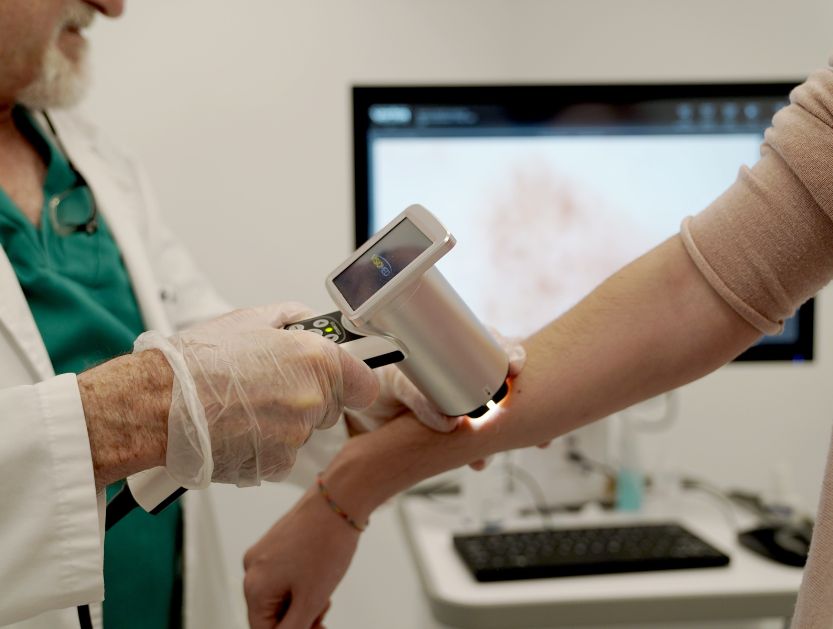

ICMR is a leading clinical research center in Europe
Nodular prurigo research projects
At ICMR, we are involved in various research projects related to nodular prurigo, in collaboration with national and international clinical research networks.
We are currently participating in studies aimed at:
- Investigating new molecules designed to modulate the immune response and reduce inflammation.
- Evaluating therapies that block chronic itch pathways.
- Exploring therapeutic combinations that improve disease control.
Our goal is to contribute to the advancement of scientific knowledge about this condition and to improve the therapeutic options available in the future.
Impact of clinical research in nodular prurigo.
Clinical research plays a key role in the development of innovative treatments for conditions such as nodular prurigo.
Through clinical research projects, it is possible to:
- Deepen the understanding of the mechanisms behind chronic and persistent itch.
- Develop medications that target both inflammation and neurosensory dysfunction.
- Establish new protocols for comprehensive patient management.
- Improve understanding of the emotional impact of the disease and design targeted support strategies.
Advances in these areas open the door to a more comprehensive and effective approach to this highly disabling condition.
Information on Available Clinical Trials
ICMR Research is currently participating in several clinical trials on nodular prurigo, including:
- Studies on new monoclonal antibodies targeting specific inflammatory pathways.
- Research projects involving innovative oral treatments.
- Trials focused on improving patients’ quality of life through therapies aimed at itch control.
Each project has specific inclusion criteria, which may take into account:
- Confirmed diagnosis of nodular prurigo.
- Duration and severity of symptoms.
- History of previous treatments and general medical condition.
Important aspects to take into account
The decision to participate in a clinical trial should be made after receiving all the necessary information and carefully considering the factors involved:
- Participation is completely voluntary and can be withdrawn at any time.
- There is no guarantee of individual benefit from the investigational treatment.
- All studies are ethically approved and conducted under strict data protection and safety regulations.
At ICMR Research, we provide personalized guidance and answer all questions to ensure that every decision is fully informed and freely made.
Frequently asked questions about clinical trials in nodular prurigo
Does participating in a study involve any cost?
No. All investigational treatments and related medical evaluations are provided at no cost to the participant.
What types of risks are involved?
Each investigational treatment may have side effects. These are explained in detail before the study begins.
Can I leave the study if I change my mind?
Yes, you may withdraw your participation at any time, freely and without the need to provide a reason.
What happens to my personal data?
The confidentiality of your personal and medical information is guaranteed in accordance with current data protection legislation.
Where can I get more information?
To learn more about the clinical trials in nodular prurigo in which ICMR Research is participating, you can contact us via:
- The contact form on our website.
- E-mail to info@icmrresearch.com.
- Dedicated phone line for clinical trial inquiries.
All inquiries are handled confidentially and personally, with no obligation.
About us
ICMR is a reference center in Spain and Europe dedicated to the research of inflammatory and/or immune-mediated dermatological diseases. Promoted by the Pedro Jaén Foundation, our main objective is to transfer the highest level of science to patients who cannot find a solution to their dermatological problems with currently approved treatments.
Research areas
At ICMR we are committed to developing research in all dermatological indications, with special attention to:

Psoriasis
We analyze genetic and immune factors to improve the management of this disease.

Alopecia areata
We investigate the autoimmune basis and new options that stimulate hair growth.

Hidradenitis suppurativa
We analyze genetic and immune factors to improve the management of this disease.

Atopic dermatitis
We explore the alteration of the skin barrier and the mediators that cause inflammation.

Nodular prurigo
We study the origin of severe itching and investigate therapies to relieve symptoms.

Vitiligo
We investigate the autoimmune process that affects melanocytes and how to recover pigmentation.

Notalgia paresthetica
We study the neuropathic origin of itching and therapies to control the symptoms.
Nummular eczema
We explore new options to improve the control of persistent flare-ups and skin inflammation.

Palmoplantar pustulosis
We evaluate alternatives to reduce pustules, inflammation and discomfort on the palms and soles.

Lichen planopilaris
We investigate strategies to control follicular inflammation and slow the progression of scarring alopecia.